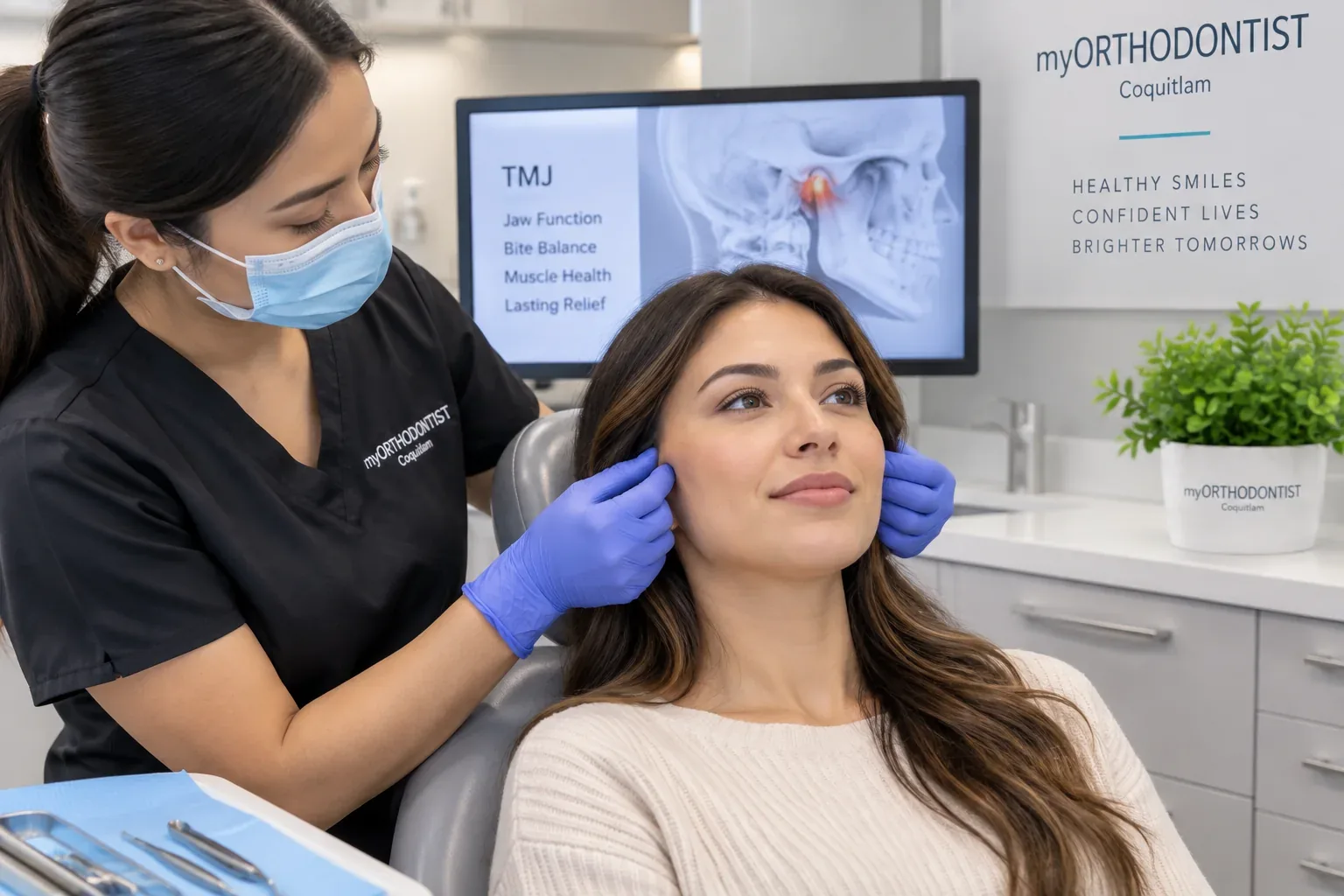
The temporomandibular joints — the hinges just in front of each ear — can click, lock, ache, and radiate pain into the temples and neck. Their symptoms have many causes: clenching and grinding under stress, joint disc problems, arthritis, injury, muscle overuse. The bite is one possible contributor among several, and an honest assessment starts by refusing to assume it's the main one.
How the bite can be involved
When the teeth meet unevenly — a deep bite that traps the lower jaw back, a crossbite that forces it sideways, missing back teeth that overload the front — the muscles work harder to find a stable closing position, and the joints take the strain. In those cases, correcting the bite can genuinely relieve certain signs and symptoms. In others, the bite is incidental and treating it won't help. We don't accept either "orthodontics fixes TMJ" or "orthodontics never helps jaw pain" as blanket statements; both are wrong often enough to be dangerous.
What an assessment looks like
- A history: when it hurts, what triggers it, clenching or grinding, stress, sleep.
- Palpating the joints and muscles; listening for clicks; measuring opening.
- A careful look at how the teeth meet — and whether the jaw is being forced off its natural path to make them meet.
- Imaging when indicated, and referral when the picture points elsewhere.
Where this leads
Often to conservative first steps — a night guard, jaw-rest habits, physiotherapy — with the bite addressed if and when the assessment says it matters. The next page is about that decision: when orthodontics helps, and when we'd steer you elsewhere.
What we do at a first visit for jaw pain
We don't start with orthodontics. We take a history and examine the joints and muscles first, then the bite, and we tell you plainly which of three pictures we see: a bite that's clearly forcing the jaw off its path; a bite that's incidental to symptoms that come from clenching, stress or joint disc issues; or a mixed picture. For the first, we'll explain how correction might help, honestly hedged. For the second, we'll say orthodontics isn't your answer and point you toward the people who can help — a physiotherapist, your dentist for a night guard, occasionally a physician. For the third, we'll usually suggest conservative steps first and revisit the bite question in a few months.
Why we're careful here
Because jaw pain is common, orthodontics is expensive, and the two are easy to link in a sales pitch. We hold the position that orthodontics may improve certain signs and symptoms when they're occlusion-related — and that promising more than that is unfair to patients in pain. The next page, when orthodontics helps TMJ, lists the specific bite patterns where we'd expect it to.
TMJ questions we're asked
Can braces cause TMJ problems?
Rarely, and usually transiently during bite changes. Well-planned treatment aims to improve joint loading, not worsen it; we monitor joint symptoms throughout.
Will a night guard fix my jaw pain?
For clenching-related pain, often substantially. It's the cheapest, most useful first step regardless of cause.
Do you treat TMJ at your practice?
We assess it and treat the bite-related component when the diagnosis supports it. We refer the rest — physiotherapy, splint therapy, physicians.
Is jaw clicking serious?
Usually not on its own. Clicking with pain, locking, or a change in bite deserves assessment.
Related reading
- When orthodontics helps TMJ — the specific bite patterns that respond
- Overbite — the deep bite that locks the jaw
- Crossbite — the sideways shift that loads joints
The bottom line
Jaw pain has many causes and the bite is one of them. A proper assessment — history, joints, muscles, and how the teeth meet — tells whether yours is bite-related, and we'll say plainly if it isn't. Conservative steps first; orthodontics if and when the evidence points there. The assessment is part of the free consultation.
If it were our own jaw
Night guard first, for six weeks, and notes on when it hurt. Then the bite assessment, with the guard's results in hand. We'd be suspicious of any clinic that proposed orthodontics for jaw pain at the first visit.