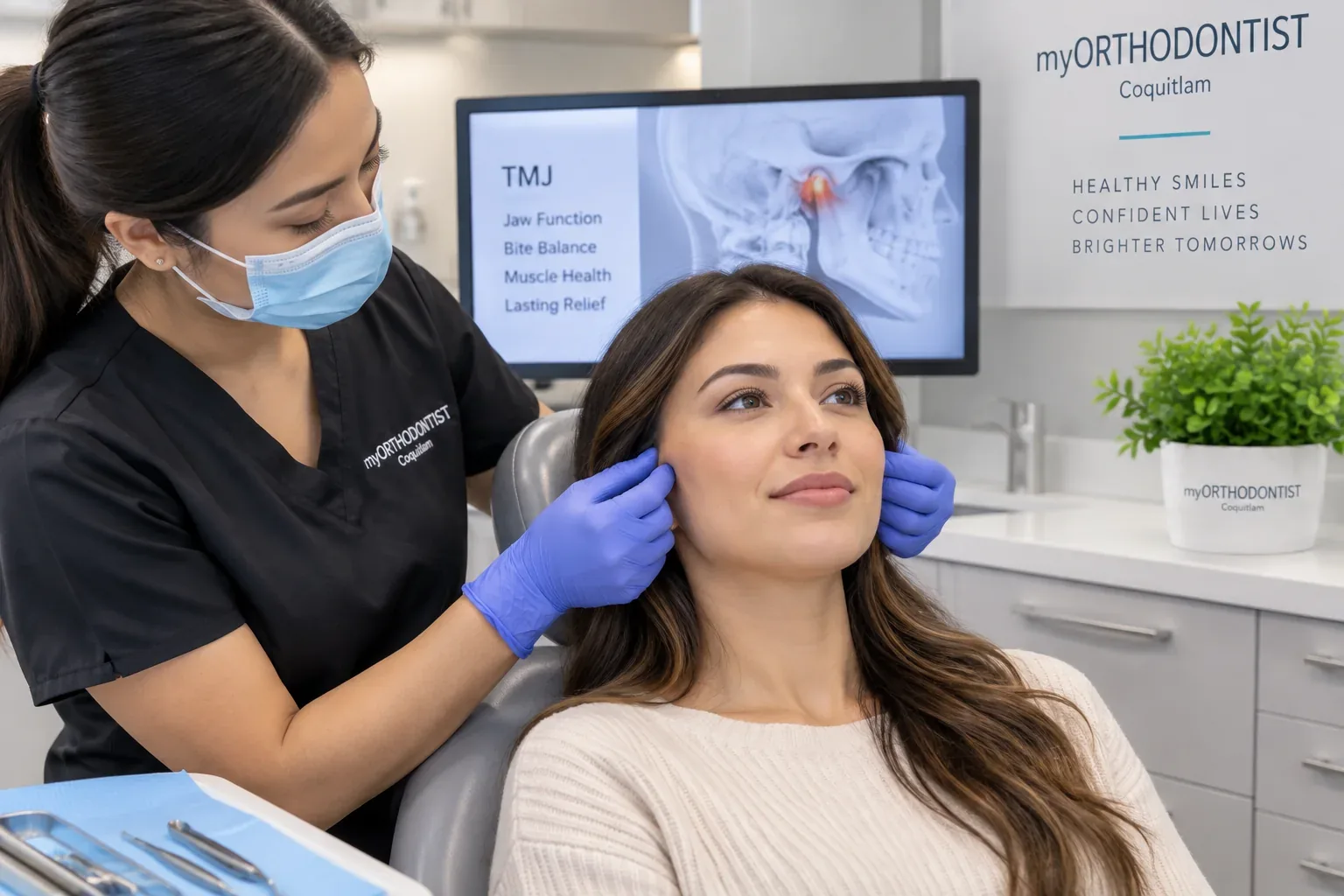
Orthodontics may improve certain signs and symptoms of TMJ dysfunction when those symptoms are related to the occlusion — how the teeth meet and how the jaw has to move to make them meet. When symptoms come from elsewhere, moving teeth doesn't help and can waste two years. The whole art is in the diagnosis.
Cases where the bite is likely part of the answer
- A deep bite locking the lower jaw — the front teeth trap the jaw back; opening the bite frees it.
- A crossbite or asymmetry forcing a sideways shift on every closure.
- Bite collapse from missing back teeth — overloaded joints and muscles; orthodontics prepares the space your dentist restores.
- A significant jaw-size mismatch — occasionally, part of a joint surgical-orthodontic plan.
Cases where we'd point you elsewhere first
Pain that tracks stress and clenching with a bite that meets evenly. Joint disc displacement diagnosed on imaging. Pain after injury. Widespread muscle pain patterns. These are managed by physicians, physiotherapists, and dentists with splints and habit therapy — and a night guard is often the first, cheapest and most useful step regardless of cause.
How to test a recommendation
If orthodontics is proposed for jaw pain, ask
- Which specific feature of my bite is causing which symptom?
- What conservative steps come first, and for how long?
- How confident are you the bite is the driver — and why?
- What would tell us it isn't working?
- Would a night guard alone be a reasonable trial?
A specialist comfortable with those questions is treating your joints, not your credit card. That standard applies to us as much as anyone — the assessment page describes how we work through it.
How a bite-related TMJ case proceeds at our practice
Conservative measures first, almost always: a night guard from your dentist, jaw-rest habits, physiotherapy where muscles are involved. We give that six to twelve weeks. If symptoms track the bite — improving as the guard takes the bite out of the picture, returning when it's removed — that's useful evidence that correcting the bite may help, and we'll plan treatment on that basis, with the specific goal named: opening a deep bite, correcting a crossbite shift, restoring posterior support. If symptoms don't track the bite, we'll say orthodontics isn't the answer and we'll mean it.
What we ask you to expect
Improvement in the specific signs we set out to change, not a promise of a pain-free jaw. Joint clicking often persists even when pain resolves. Stress and clenching outlast any bite correction. We'll be honest about that at the start, and we'll send you to a colleague if the diagnosis points elsewhere — a specialist's job includes knowing what isn't theirs.
Questions about orthodontics for TMJ
How long before I'd know if the bite is the cause?
A six-to-twelve-week trial with a night guard usually tells us whether symptoms track the bite.
Will my jaw pain go away completely?
We aim to improve the signs we set out to change. Clicking often persists; stress-related clenching outlasts any bite correction. We'll be honest about that.
Is Invisalign or braces better for TMJ?
Whichever the specific bite correction needs. Aligners can act as a light splint during treatment, which some patients find comfortable.
Do you charge for a TMJ assessment?
No — it's part of the free consultation.
Related reading
- TMJ and your bite — how we assess the connection
- Jaw surgery — for severe skeletal mismatches
- Second opinions — before committing to treatment for pain
The bottom line
Orthodontics may improve certain TMJ signs and symptoms when they're related to how the teeth meet — a locking deep bite, a crossbite shift, a collapsed bite. It won't help pain that comes from elsewhere, and a night guard is the right first step for almost everyone. Diagnosis decides; we'll tell you honestly which picture we see.
If it were our own decision
We'd want the specific bite feature named — deep bite, crossbite shift, lost posterior support — and a plain statement of what treatment would and wouldn't change. Without that, we'd stay with the guard and the physiotherapist.