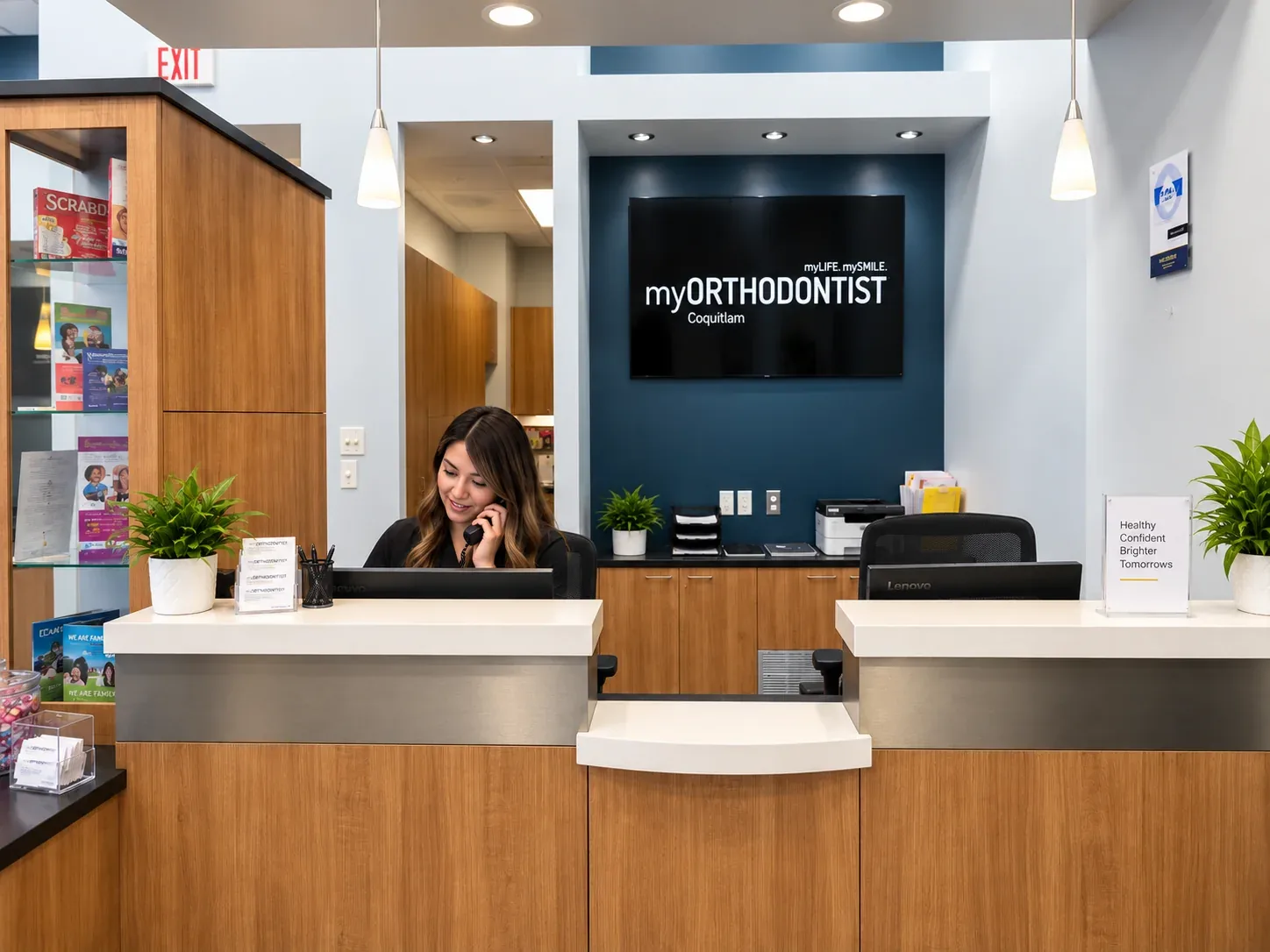
In British Columbia you can book a consultation with any orthodontist directly. No referral is required, no gatekeeping, and specialist consultations are typically free. If you or your child have a concern about the bite, you can simply call.
Why referrals still matter
Because your general dentist is the quarterback of your oral health. They see you twice a year, notice a crossbite at a routine cleaning, spot a canine that hasn't appeared on schedule, and know your dental history in a way no first visit can replicate. Many of the best treatment outcomes begin with "my dentist suggested I come." Referrals also mean the team is already talking before treatment starts.
What happens when you come directly
Exactly the same consultation — and then we loop your dentist in, with your permission, sharing findings and coordinating the cleanings and dental care that continue throughout orthodontic treatment. Coming directly never means leaving your dentist; it means starting a three-way conversation a little earlier.
When to come without waiting
- A child turning seven who hasn't had a specific orthodontic look.
- Signs on the early-treatment list — a jaw shift, a narrow arch, an underbite, a persistent habit.
- An adult whose teenage retainer stopped years ago and whose teeth have drifted.
- Anyone who has been told they "might need braces" and would like a specialist's read.
And if your dentist provides orthodontic care themselves and has recommended treatment, a free specialist consultation is a reasonable second data point — good dentists welcome it. How the two professions work together explains the partnership.
What we send back to your dentist
With your permission: our findings, the plan, and the timeline, at the start; a note at any significant milestone; and the debond summary with the retention plan at the end, so your dentist can keep an eye on retention at cleanings. Dentists who refer to us tell us the thing they value most is simply knowing what's happening — and it's the least we owe the person who's quarterbacking your oral health. If a dental issue arises mid-treatment, we'll talk to each other rather than through you.
If your dentist offers orthodontics
Many do, and some do it very well, particularly for mild adult cases. If yours has recommended treatment and you'd like a specialist's read, that's a normal and reasonable request — a free consultation with us is a second data point, not a verdict on your dentist, and complex findings flow back to them. Where the case is genuinely mild, we'll say your dentist can handle it well. Where it isn't, they'll usually be glad we looked. How the team works is the fuller story.
Referral questions
Can I see an orthodontist without a dentist?
Yes, though we'd want you to have one — cleanings continue through treatment and matter more with braces.
Does a referral make treatment cheaper?
No. Fees are the same either way. What a referral adds is coordination.
What if I don't have a family dentist?
We'll suggest you find one and can point you to practices in the Tri-Cities that are taking patients.
My dentist referred me to a different orthodontist. Can I still see you?
Of course — a second free consultation is a reasonable step, and we'd send findings back to your dentist.
Related reading
- Dentists and orthodontists — the partnership explained
- Book a consultation — how to come directly
- Your first visit — what to bring
The bottom line
You don't need a referral to see us, and we'd still like your dentist involved. Book directly if you have a concern or a seven-year-old; tell us your dentist's name; we'll coordinate from the first visit. If your dentist provides orthodontics and you'd like a specialist's read, that's a normal request and we'll send our findings back to them.
Booking directly: what to have ready
- Your dentist's name, so we can coordinate
- Any recent X-rays (ask your dentist to send them)
- Your benefit plan details, for the coverage check
- Your specific concern — the thing you noticed
- For children: the age-seven question, if no one has looked yet