Healthy teeth move at 25, 45 or 70. What changes as an adult is the context: no growth to harness, sometimes gum or restorative history to work around, and a much stronger preference for discreet options. Adults are also the best compliers — which is why aligner outcomes in adults are excellent.
Why adults seek treatment
- Relapse after teenage braces — the most common adult case; often shorter and cheaper than the original treatment
- Crowding that worsened with age — teeth drift forward throughout life
- Pre-restorative alignment — creating space and positioning for implants, crowns or veneers
- Bite discomfort, uneven wear or cleaning difficulty
- Simply wanting it — a valid reason at any age
Your discreet options in Coquitlam
Invisalign is the default adult choice for suitable cases; ceramic braces cover cases needing fixed control without a metal look. Timelines match teen treatment for equivalent complexity — commonly 6–18 months for relapse cases and 12–24 for comprehensive work.
The honest caveats
Gum health must be stable before teeth move — a specialist will screen for this and coordinate with your dentist. Bites that would have been growth-corrected in a teen may need alternative mechanics, and rare severe skeletal cases involve a surgical conversation. A good adult consultation names these possibilities upfront rather than discovering them mid-treatment.
How adult treatment goes at our practice
We start by asking what you actually want — a specific tooth, a bite that's bothering you, a smile for a specific occasion, or preparation for a crown or implant — because adult treatment can be scoped to the goal in a way children's treatment can't. Then records, a gum-health check (and a conversation with your dentist if anything needs settling first), and a plan priced as the limited or comprehensive case it actually is. Many adult cases we see are genuinely limited: six to twelve months of aligners to undo years of drift.
The discreet options, honestly ranked
Invisalign for most suitable adult cases — invisible, removable for meetings and meals, and adults are the best compliers in the building. Ceramic braces where the case needs fixed control: nearly invisible at conversation distance, a modest premium, a note about ties staining. Metal braces if value matters more than appearance and you'd rather be done faster; plenty of adults choose them. We'll price whichever two are viable for you side by side.
Working around dental work
Crowns, bridges and implants are common in adult mouths and none of them stop treatment — but implants don't move, and bridges move as a unit, so the plan is designed around them. If your dentist is planning restorative work, the sequence matters: orthodontics first to position the teeth, restorations after. We coordinate that with your dentist directly, and it's one of the most valuable things a specialist adds for an adult patient. If your interest is a bite that's hurting, start with TMJ and your bite; if it's teeth that drifted after teenage treatment, relapse and retreatment.
Frequently asked questions about adult orthodontics in Coquitlam
Am I too old for braces or Invisalign?
No. We treat patients in their sixties and seventies. Healthy gums and stable dental work are the prerequisites, not age. Adult retreatment is among the most common cases we see.
How long does adult treatment take?
Limited relapse cases: six to twelve months. Comprehensive cases: twelve to twenty-four, the same as a teenager with the same problem. Adults comply beautifully, which helps.
Will treatment affect my crowns or implants?
We plan around them. Implants don't move; bridges move as a unit; crowns are fine. If restorative work is planned, orthodontics usually goes first — we coordinate with your dentist.
Can I do this discreetly at work?
Yes. Aligners are invisible and come out for meetings; ceramic brackets on the upper front teeth are nearly invisible at conversation distance. We'll price both.
What does adult treatment cost?
Limited cases $2,500–$5,000; comprehensive in the standard $4,500–$8,500 range; retainers included. Some extended-health plans cover adults — we'll check.
Adult cases we see most, and how they go
The drifted lower front teeth. Teenage braces, retainer abandoned at nineteen, overlap noticed at thirty-five. Six to nine months of aligners, a bonded lower wire this time, done. The pre-implant case. A missing back tooth, neighbours tilted into the gap; the dentist needs the space upright before an implant. Four to eight months of partial braces or aligners, then the restoration — a plan made jointly with the dentist from the start. The bite that finally bothers. A deep bite wearing the lower incisors, or a crossbite the joints have started to notice; twelve to eighteen months, sometimes with a night guard alongside. The one for themselves. A fortieth birthday, a wedding, a new chapter — comprehensive treatment, usually aligners, chosen with no apology needed.
What's different in an adult mouth, clinically
Bone remodels a little more slowly. Gums must be healthy before anything moves — we'll check, and coordinate with your dentist or a periodontist if they aren't. Old fillings, crowns and worn edges shape what's possible and sometimes what's sensible: aligning teeth perfectly that will then be crowned is a conversation about sequence with your dentist. And there's no growth to harness, so a skeletal discrepancy is camouflaged or corrected surgically, not guided; the jaw surgery page is honest about when that applies and, for most adults, when it doesn't.
What adults tell us afterwards
That they wish they'd done it sooner, mostly. That aligners were easier than expected and that the retainer routine is no burden once it's a habit. That the coordination with their dentist mattered more than they'd anticipated. And, occasionally, that a bite they'd lived with for decades was quietly affecting how they chewed and slept, and they hadn't known until it changed. We don't promise that last one; we hear it often enough to mention it.
A closer look: an adult aligner case, start to finish
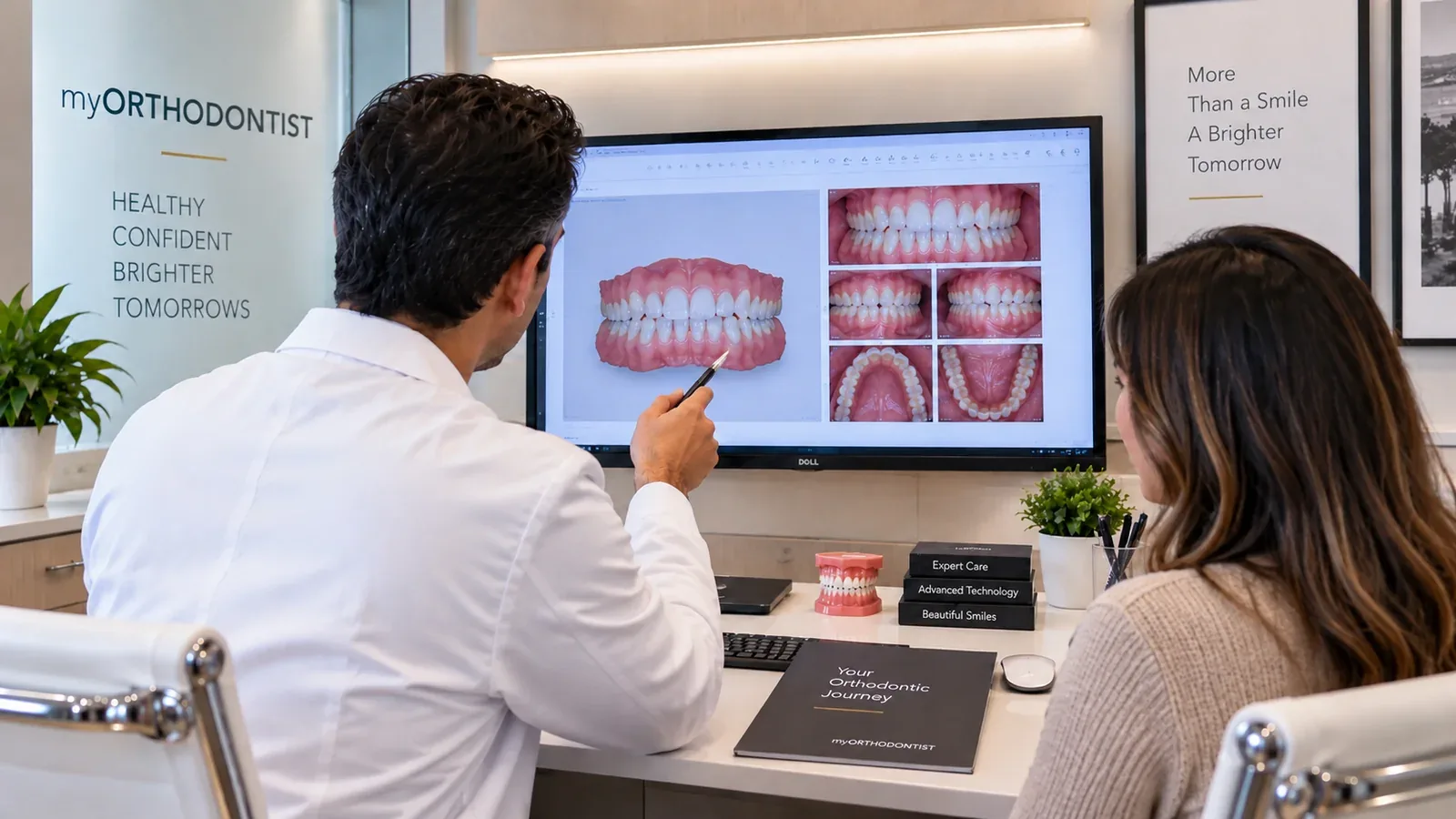
Consultation: records, a gum check, a scan, and a simulation of the result on screen. A week later, a written fee for a limited or comprehensive package, with refinements and retainers included. First visit: attachments bonded, first trays fitted, a routine explained. Every six to ten weeks, a ten-minute tracking check — in and out between meetings. Around month six, a refinement scan and a new tray series. Around month ten to fourteen for a typical case, the last tray; attachments polished off; retainers fitted the same week. Then nightly Vivera retainers, a check at six months and a year, and your dentist checking retention at cleanings. Most adults describe it as easier than they expected and wish they'd started sooner.
Adults and the airway conversation
Adults who snore, grind or wake unrefreshed sometimes ask whether their bite is involved. Occasionally it is — a narrow upper arch or a retruded lower jaw can be part of the picture — and orthodontics can play a role in a plan led by a physician or sleep specialist, sometimes alongside surgical expansion or jaw surgery. We'll say honestly what we see and who else should be involved. Airway involvement is patient-specific and we don't sell orthodontics as a cure for sleep problems.
Before you go
If your teeth drifted after teenage treatment, read relapse. If you're preparing for restorative work, mention it when you book so we can plan with your dentist. If it's simply your turn, the cost pages and a free consultation are the next steps.
Misconceptions we correct most often
“Adult teeth move too slowly to bother.”
Slightly slower, not too slow. Limited adult cases often finish in under a year.
“I'd need to remove my crowns first.”
Crowns are fine; implants don't move; bridges move as units. We plan around them.
“It's vain at my age.”
Function, cleanability and a bite that doesn't wear are health reasons. Wanting it is reason enough anyway.
What Coquitlam families search for, answered
“Can you get braces at 40? At 50?”
Yes, and adults in their sixties and seventies. Gum health is the prerequisite, not age.
“How much is adult Invisalign in Coquitlam?”
Limited cases $2,500–$5,000; comprehensive $4,500–$8,500; retainers and refinements included at our practice.
“My teeth shifted after braces — what can I do?”
Usually a short aligner case with permanent retention this time. It's the most common adult case we see. See the relapse page.