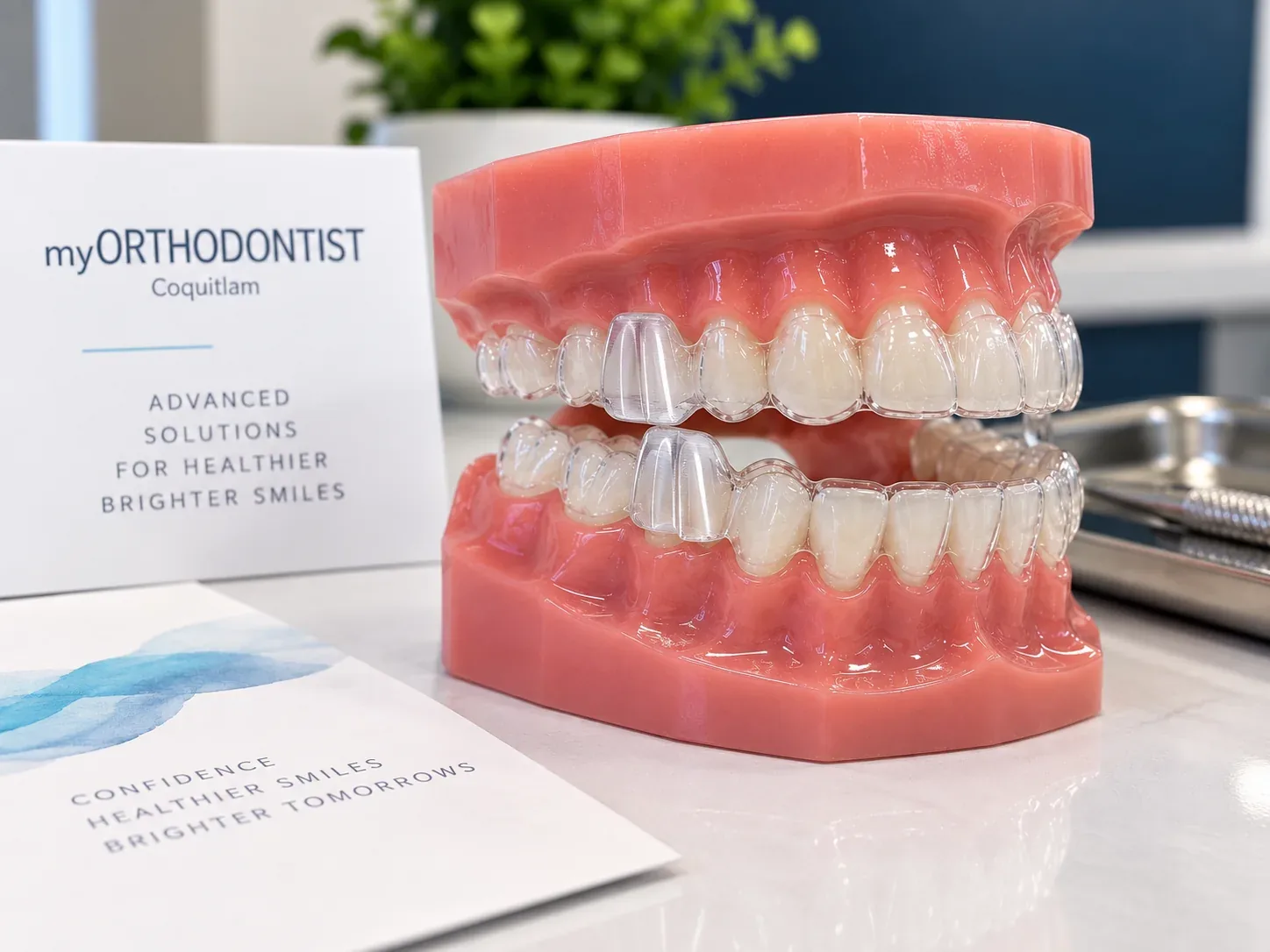
Ages 12 to 16 are orthodontics' sweet spot: the adult teeth are in, growth is still available to help with bite correction, and treatment finishes before the demands of adulthood. Most comprehensive cases run 12–24 months. The decisions parents face here are less about whether and more about which — and who should be making the call.
The real fork: braces or aligners
Both produce excellent results. The honest difference is compliance. Braces are bonded on and work around the clock regardless of willpower. Invisalign Teen is nearly invisible and removable — outstanding for a teen who will genuinely wear trays 20–22 hours a day, and a slow-motion problem for one who won't. Compliance indicators help parents see the truth, but they don't wear the aligners.
A specialist should walk your family through this candidly rather than selling the premium option. If the honest answer about your teen's habits is "unlikely," braces will produce the better outcome — and saying so is a sign of a clinic worth trusting.
Involving the teen in the decision
Treatment your teenager chose goes measurably better than treatment imposed on them. Bring them to the consultation, let them ask their own questions, and let the aesthetic preferences they care about (ceramic brackets, colour choices, aligners) carry real weight where the clinical case allows.
Timing around high school life
- Sports and band — both continue; guards and adjustment periods are managed, not avoided.
- Grad photos — a genuine factor in start-date planning; raise it at the consultation and a specialist will map the timeline around it.
- The move away — starting treatment at 17 with university on the horizon needs a plan for who finishes it. Ask directly.
Teen consultation checklist
- Both braces and aligners priced honestly for this case
- A frank compliance conversation, teen included
- Written timeline mapped against school milestones
- Retainer plan explained before treatment starts
- Your teen's own questions actually answered
Younger children have a different timing conversation entirely — see early orthodontics. Costs and payment plans for teen treatment sit in the standard ranges covered in the cost guide.
How we run a teen consultation
With the teenager as the primary patient, not the parent. We ask them what bothers them — it's often something specific and different from what the parent noticed — and what they'd want the result to look like. We show them their own scan and, for aligner candidates, their own simulated result, because that's usually the moment the treatment becomes theirs rather than something being done to them. Then the frank compliance conversation, with the teen in the room. Treatment a teenager chose goes measurably better than treatment imposed on them, and it starts here.
What the timeline looks like against real life
Bond day is ninety minutes, painless, followed by a sore week — we help families schedule it away from exams and performances. Adjustments every six to eight weeks, mostly after school; we keep Saturday and early slots for this reason. Sport continues with a mouthguard, band with a fortnight of adjustment. Grad photos, exchanges, and the year university begins are all planning inputs we ask about, because a treatment that finishes three months before grad is a better plan than one that doesn't.
For teens whose lower jaw sits back
A prominent overjet in a still-growing teenager can often be corrected with Invisalign with mandibular advancement — aligners with wings that guide the jaw forward while straightening the teeth — rather than a separate functional appliance followed by braces. We recommend it for suitable eleven-to-fourteen-year-olds who'll wear it; the profile X-ray and the growth stage decide.
The honest word on aligners at fifteen
They're brilliant for the teenager who'll wear them and a slow-motion problem for the one who won't, and the parent usually knows which they have before we ask. When the answer is doubtful, braces produce the better result and we say so plainly — ceramic brackets and colour choices give image-conscious teens a middle path. The full decision guide is Invisalign for teens; the fee for either route is in the standard range on braces cost and Invisalign cost, retainers included.
Frequently asked questions about teen orthodontics
What's the best age for a teenager to start braces?
Usually eleven to fourteen — adult teeth in, growth still available for bite correction. Earlier if a first phase was indicated; later is fine, just without the growth advantage.
How long will my teenager be in treatment?
Twelve to twenty-four months for most comprehensive cases, shorter if a first phase already did the structural work.
Can my teen play sports with braces?
Yes, with an orthodontic mouthguard. Contact sports included. We'll recommend the right guard.
Will braces affect grad photos?
Only if they're still on. Tell us the date and we'll plan the timeline around it — often finishing three months before.
What if my teenager refuses to wear aligners?
Then braces are the kinder choice, and we'll say so before you've paid for trays that live in a backpack. How we decide.
Do teenagers need a first phase before this?
Only if there was a skeletal indication at seven to ten. Many teenagers come to us for a single comprehensive phase with no earlier treatment, and do beautifully.
How treatment fits a high-school calendar
We've timed hundreds of teenage cases around the same milestones. Bond in the first weeks of a term, not exam week. Keep adjustments after school; we hold those slots. Expect a tender few days after each visit and plan food accordingly. Sport continues with a guard; band continues after a fortnight. Debond before grad photos, before the exchange trip, or before the summer job — tell us the date and it becomes a planning input. Retainers come out for the grad dinner and go back in that night. Treatment should fit a life, not interrupt one.
Involving the teenager, concretely
We address them, not you. We ask what bothers them — it's often a different tooth than the parent noticed. We show them their scan and, for aligner candidates, their simulated result. We let them choose between viable options where the case allows: ceramic or metal, colours or none, trays if they'll wear them. We explain the retainer rule to them, not through you. And at each visit we talk to them about progress. Teenagers who own their treatment finish it well; teenagers who are dragged through it finish it late.
When the teenager and the parent disagree
It happens — usually about aligners versus braces, sometimes about whether to treat at all. Our role is to be honest about the case: which appliance the movements need, how much compliance the plan assumes, what waiting would cost. A teenager who understands why braces are recommended usually accepts them; a parent who understands why their teenager would wear aligners usually agrees. When the case genuinely allows either, we'll price both and let the family decide together. The cost pages make the money side of that conversation concrete.
A closer look: the compliance conversation, verbatim
We say to the teenager, roughly: "Aligners work if they're in your mouth twenty-two hours a day — that means out for eating and brushing, in for everything else, every day, for a year or more. Nobody will check except the trays themselves. Braces work whether you think about them or not, but you'll see them in photos and there are foods to avoid. Which of those sounds like you?" Most teenagers answer honestly when asked directly, and their answer is usually right. The ones who choose aligners having heard that tend to wear them; the ones who choose braces tend to be relieved. The parent's role at that moment is to let the teenager answer.
What a good teenage result looks like at thirty
Straight teeth that stayed straight because retainers were worn; a bite that functions and doesn't wear; premolars still in the mouth because room was made rather than taken; and, for the children we saw early, a jaw relationship that never needed a surgical conversation. Teenage orthodontics is a long-term investment, which is why we take the retention conversation as seriously as the treatment and why we lean toward creating room during growth. The teenager doesn't think in decades; we do it for them.
Before you go
Read Invisalign for teens if that's the question in your house, and the cost pages for the money. Then book the free consultation — with the teenager — and let us ask them directly.
Misconceptions we correct most often
“Invisalign is easier for teens.”
For teens who wear it. Braces are easier for teens who won't.
“Braces will ruin grad photos.”
Tell us the date and we plan around it.
“Teenagers don't care about the result.”
They care intensely — about different things than parents. Ask them.
What Coquitlam families search for, answered
“Best age for braces?”
Eleven to fourteen for most comprehensive cases — adult teeth in, growth still helping. Earlier only if a first phase was indicated.
“Invisalign for a 13-year-old?”
Possible with Invisalign Teen, if the thirteen-year-old will wear it twenty-two hours a day. Ask them; believe the answer.
“How to help my teenager with braces?”
Keep the appointment rhythm, keep the food rules light-handed, let them choose colours, and let them answer the orthodontist's questions themselves.